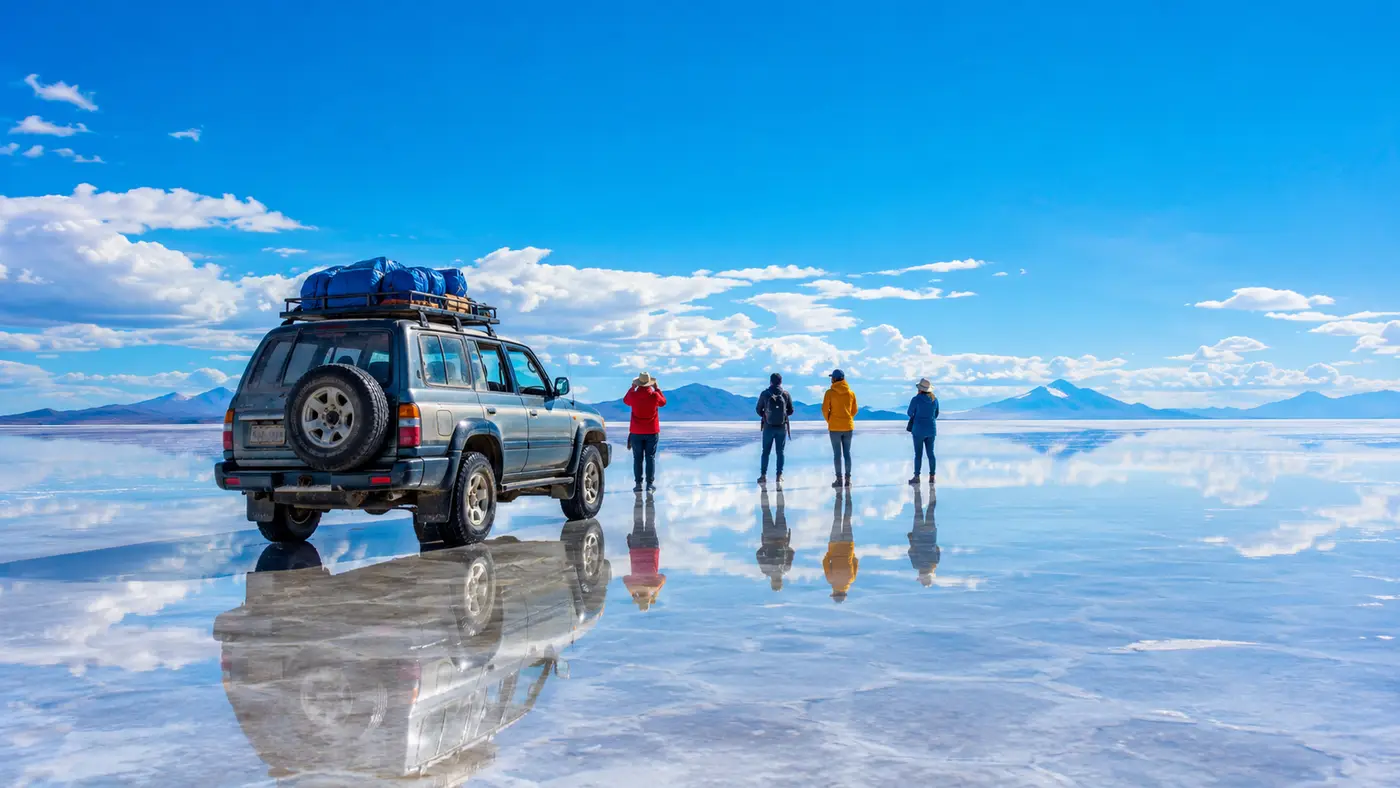
Salar de Uyuni Tour Prices, Packages, and Options
Walking into the dusty center of Uyuni town can feel like stepping onto a stock exchange trading exclusively in old Toyota Land Cruisers. Every second doorway along Avenida Ferroviaria is an agency office, papered with sun-faded photos of pink lagoons, giant cacti, and reflective water. Finding an honest salar de uyuni tour price takes a bit of work because two people sitting in the exact same vehicle often pay wildly different rates for the exact same seat. It comes down to where you book, how well you negotiate, and how much comfort you demand when nighttime temperatures drop below freezing.
The range runs from dirt-cheap shared runs to lavish expeditions featuring geodesic domes and hot water bottles tucked beneath goose-down duvets. Bolivia remains one of the most affordable countries in South America for wilderness travel, but you generally get what you pay for on the salt flats. Mechanical breakdowns happen. Meals can be basic, or they can be gourmet spreads paired with Tarija red wines. Let us pull back the curtain on what these trips actually cost, what hidden fees lie ahead, and how to pick the right package without throwing away your money.
Book your Salar de Uyuni tour experience:
Breaking Down the Standard Salar de Uyuni Tour Price
A standard 3-day shared trip booked directly in town runs between $150 and $210 per person. That baseline includes transport in an aging 4x4, basic shared dormitory lodging, three simple meals a day, and an experienced local driver who doubles as mechanic and cook. If you see someone offering a three-day trek for under $130, step back. That discount usually means bald tires, no working seatbelts, or a driver running on three hours of sleep. I watched a group push their Land Cruiser through muddy brine for nearly two hours because the starter motor died, and their agency was nowhere to be found.
Day trips operate on a different scale entirely. A full-day outing leaving Uyuni around 10:00 in the morning and returning after sunset costs about $35 to $55 per person on a group basis. That gets you out to the train cemetery, the salt processing sheds at Colchani, the endless white flats, Incahuasi Island, and a sunset glass of cheap local wine. If you only have twenty-four hours to spare, our detailed Salar de Uyuni 1-Day Tour Guide breaks down the timing so you do not waste daylight waiting around town offices.
Note: Quoted prices almost never include local park entrance fees or community tolls. You will need around 180 to 220 Bolivian Bolivianos in crisp cash per person tucked into your pocket before leaving town.
When you look closely at standard bolivia group tours, group size is the big differentiator. Budget operators cram six passengers into a vehicle alongside the driver, making seven people total. The rear fold-down jump seats offer almost no legroom, and your knees will press against your chest for hundreds of miles of washboard gravel. Paying roughly $40 more per person to cap the vehicle at four or five travelers makes an unbelievable difference to your spine.
Comparing Tour Packages: Shared vs Private Options
Deciding between a shared route and a dedicated private vehicle comes down to schedule control and photography goals. On a shared itinerary, the driver follows a rigid timetable to hit hostel stops before the hot water runs out. If the late afternoon light hits the volcanic ridges perfectly, you cannot stop for an hour to set up a tripod. A salar de uyuni private tour lets you dictate the pace, pause whenever you like, and skip the crowded buffet lunch spots entirely.
Private excursions cost significantly more, but the per-person hit shrinks if you bring your own crew. Chartering a reliable private vehicle with an English-speaking guide typically runs $750 to $1,300 total for a three-day route. Split between three or four friends, that works out to a very reasonable salar de uyuni tour cost for absolute freedom across the Eduardo Avaroa National Reserve. Bolivian drivers know these tracks intimately, yet only the private operators consistently hire dedicated bilingual guides who explain the complex geology instead of just steering.
| Tour Style | Duration | Group Size | Average Cost (USD) | Key Inclusions & Vibe |
|---|---|---|---|---|
| Standard Shared Day Tour | 1 Day (8-9 hrs) | 6 passengers | $35 - $55 per person | Salt flats, Incahuasi Island, sunset, basic lunch |
| Standard Shared Circuit | 3 Days / 2 Nights | 6 passengers | $160 - $220 per person | Salt hostel dorms, simple meals, lagoons, geysers |
| Classic Private Jeep Tour | 3 Days / 2 Nights | 2 - 4 passengers | $350 - $600 per person | Private vehicle, English guide, flexible stops, better lodging |
| High-End Luxury Package | 3 Days / 2 Nights | 2 passengers | $1,200 - $2,500 per person | Palacio de Sal or Airstream, gourmet meals, private oxygen |
| Cross-Border to Chile | 3 Days / 2 Nights | 4 - 6 passengers | $190 - $260 per person | Terminates at Hito Cajon border for San Pedro transfer |
Before you hand over bills at an agency counter, grill the booking agent on the exact logistics. Some agencies talk a big game, then farm you out to a third-party subcontractor running a rattling rust bucket.
- Seat capacity: confirm whether the car carries six passengers or four, because that back bench seat is brutal over six-hour driving stretches.
- First aid gear: check if the vehicle carries an oxygen tank, as you will cross mountain passes above 16,000 feet where altitude sickness hits hard.
- Sleeping arrangements: ask explicitly if the first night includes private bathrooms or communal dormitory stalls without hot showers.
- Vehicle model: verify you are riding in a 4WD Toyota Land Cruiser or Nissan Patrol rather than a passenger van that struggles in deep sand.
If you prefer a structured route that circles back or drops you across the border, our breakdown of the Salar de Uyuni 3-Day Tour Itinerary and Cost shows how the daily driving hours stack up across different company tiers.
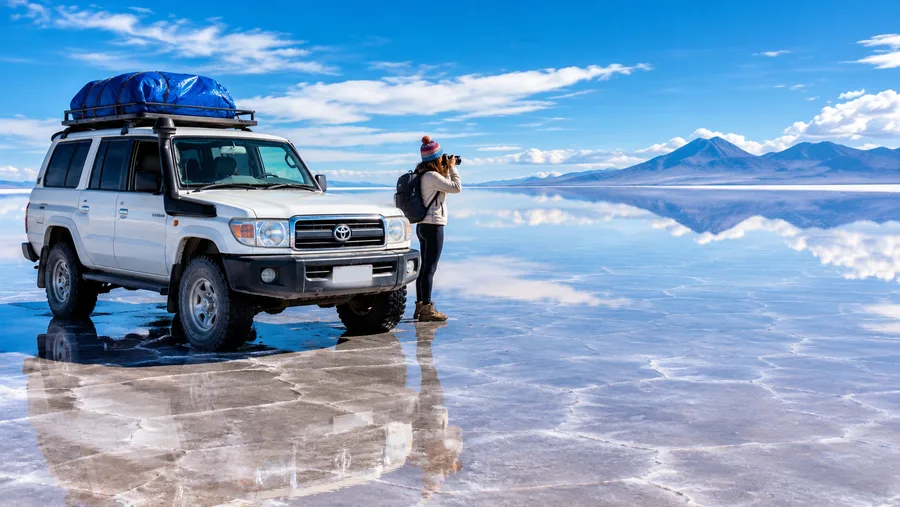
High-End Comfort: Uyuni Salt Flats Tours Luxury and Airstreams
Not everyone wants to freeze under four scratchy llama-wool blankets in a windswept refuge that shuts off electricity at nine at night. A salar de uyuni luxury tour delivers an entirely different experience. Several boutique operators maintain customized Airstream campers parked right on the salt surface, complete with plush double beds, private heated bathrooms, and personal chefs preparing multi-course dinners under the clearest night sky on the continent.
Pro tip: If booking upscale salt hotels near Colchani, request a room in the central wing away from the exterior walls, as morning winds make perimeter rooms drafty regardless of radiators.
These uyuni salt flats tours luxury packages typically start around $1,200 per person and can reach $3,000 for private multi-day itineraries. Properties like Palacio de Sal, Luna Salada, and the remote Kachi Lodge offer heated rooms built from genuine salt blocks, spa treatments, and private stargazing sessions with laser pointers. If you have the budget, escaping the noisy hostel common rooms turns an exhausting desert crossing into something serene.
High-end bolivia private tours also resolve the guide lottery. On budget runs, your driver speaks rapid-fire colloquial Spanish, pays attention to the terrain, and provides minimal commentary. Luxury operators assign a dedicated guide who speaks fluent English, French, or German, freeing the driver to focus exclusively on avoiding salt crust sinkholes and navigating blind mountain tracks.
Book your Salar de Uyuni tour experience:
Alternative Packages: From Bike Expeditions to Multi-Day Crossings
There are ways to see this landscape beyond the standard jeep tour salar de uyuni path. A growing number of travelers tackle the white expanse on two wheels. A salar de uyuni bike tour involves riding fat-tire mountain bikes over the hard, hexagonal salt formations. Most operators transport your main luggage in a support car while you pedal 25 to 50 miles per day across pure white plains. These guided bike packages usually cost around $180 per day, covering bike rentals, vehicle support, camping gear, and meals.
Pedaling through absolute silence feels surreal, though the wind can turn into a vicious headwind by two in the afternoon. Salt dust gets into gears, chains, and camera lenses within minutes. Your bottom bracket will crunch, and your lips will chap before midday. Still, looking out over eighty miles of flat white crust from a bicycle saddle beats bouncing inside a crowded passenger cab any day.
Another classic option is the one-way transnational package. Rather than looping back to Uyuni town on day three, the jeep drives southwest toward the Licancabur volcano, drops passengers at the Chilean border post at Hito Cajon, and a partner minibus transfers you straight down to San Pedro de Atacama. It is an efficient way to connect two major highlights of the continent without backtracking, and you can review the border transition nuances in our guide to the Atacama to Salar de Uyuni Tour.
A multi-day salar de uyuni tour package ending in Chile generally costs about $20 to $40 more than the standard circular loop. That extra money covers the cross-border bus ticket and the transfer coordination between Bolivian and Chilean transport operators at the immigration checkpoint.
Hidden Costs You Should Expect to Pay in Cash
Budgeting for this journey requires more than just paying the headline agency fee. Agencies are notorious for advertising rock-bottom prices, only for travelers to discover half a dozen mandatory cash expenses scattered across the salt desert. None of these outposts accept credit cards, mobile apps, or foreign currency. You must carry physical paper cash, preferably small, unripped Boliviano notes.
The biggest single expense along the route is the Eduardo Avaroa Andean Fauna National Reserve entry fee, which sits at 150 BOB per person. The rangers check tickets at a roadside gatehouse near Laguna Colorada, and if you do not have exact cash, things get awkward fast. Then there are community tolls. Colchani charges a small environmental fee, and Incahuasi Island requires an entrance ticket to climb among the towering, centenarian cacti.
- National Reserve Permit: 150 BOB (roughly $22 USD) paid at the Eduardo Avaroa park entrance gate.
- Incahuasi Island access: 30 BOB to hike the paths and reach the panoramic cactus ridge.
- Hot springs entry: 6 BOB at Polques thermal springs, plus another 5 BOB if you want to use the changing stalls.
- Showers and restrooms: 5 to 10 BOB per stop at roadside stops and budget dorms, where hot water runs on electric showerheads.
- Driver and cook gratuities: around 100 to 150 BOB per passenger for good service over a three-day expedition.
Keep your cash stored in a dry ziplock bag inside your daypack. Moisture, grit, and dust find their way into everything in the Altiplano, and torn or heavily crumpled notes are routinely rejected by small shopkeepers and park attendants out in the middle of nowhere.
Frequently Asked Questions about salar de uyuni tour price
Can I negotiate the price in Uyuni town?
Yes, especially during low-demand months from April to November. Walking through half a dozen storefronts along Avenida Ferroviaria will uncover slight price differences, but pushing too hard on price often results in the agency cutting corners on food quality or vehicle safety.
What is included in a cheap 3-day tour?
Budget shared tours cover 4WD transport, two nights of basic dormitory accommodation, and three meals daily prepared by the driver or cook. They exclude national park entrance fees, hot spring access, bottled drinking water, snacks, and personal sleeping bags.
Is it cheaper to book online or in person?
Booking in person in Uyuni or La Paz is almost always 30 to 50 percent cheaper than reserving through international online travel portals. However, booking in person requires flexibility with your schedule, as you may need to wait a day for a group jeep to fill its remaining seats.
Quick Reference
- Standard shared 3-day tour: $160-$220 USD
- Private 3-day expedition: $750-$1,300 USD per vehicle
- Mandatory park entry cash: 150 BOB (~$22 USD)
- Standard group vehicle size: 6 passengers plus driver
Book your Salar de Uyuni tour experience:
The Bottom Line
Crossing the Bolivian salt flats is a raw, jarring, unforgettable overland expedition. Trying to shave twenty dollars off your tour price by choosing the absolute cheapest agency on the street rarely pays off when you are stranded with a cracked radiator three hundred miles from the nearest paved road. Pick a mid-tier operator that limits the jeep to five passengers, carries emergency oxygen, and provides decent food. It makes the cold nights bearable and lets you enjoy one of the most unbelievable landscapes on the planet without stressing over the machinery underneath your feet.
Read more about Salar de Uyuni tour.