Best Time to Visit Salar de Uyuni
Most travelers think planning a trip to southwest Bolivia is just about picking a date on a calendar, buying a plane ticket to La Paz, and hopping onto a night bus. You show up expecting endless white hexagons, only to find three inches of freezing water stretching to the horizon. Or you arrive chasing that famous best time to visit salar de uyuni bolivia window for mirror reflections, and all you see is dry, cracked earth. Salar de Uyuni does not operate like a standard national park. It exists in two distinct personalities, and choosing the wrong month means experiencing a completely different landscape than the one in your head.
The plain sits at 3,656 meters above sea level across more than 10,500 square kilometers of the Altiplano. Because of that extreme geography, weather patterns here are sharp, unforgiving, and dramatic. Deciding when to make the journey comes down to a fundamental choice between pristine reflection photography and unimpeded backcountry exploration. I spent weeks tracking regional rainfall and talking to local drivers in Colchani before figuring out how these seasons actually play out on the ground.
Book your Salar de Uyuni tour experience:
The Wet Season: Experiencing the Bolivia Mirror Lake Effect
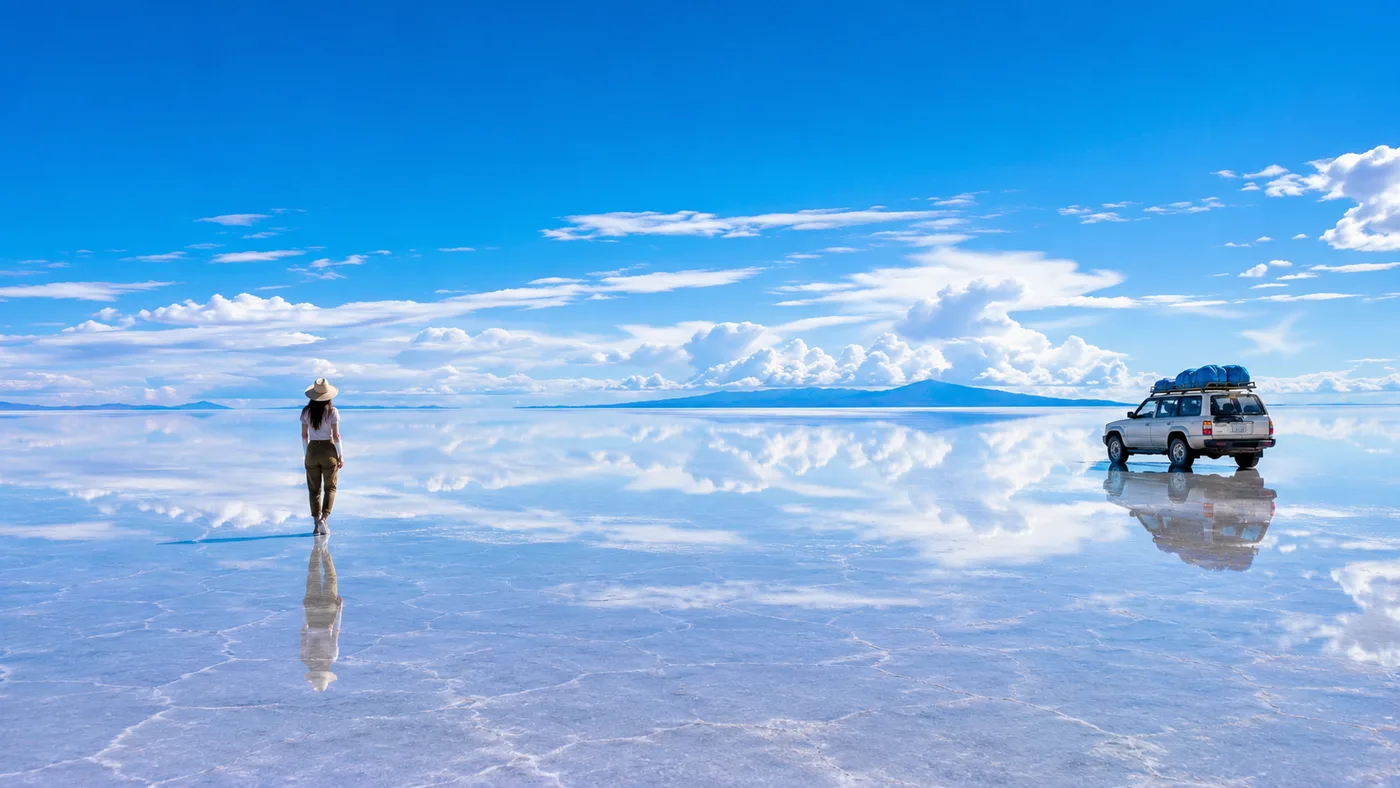
Between January and March, rainfall transforms the salt desert into what people call the world's largest natural mirror. Water drains from the surrounding mountains, pooling across the impermeable salt crust. It rarely gets deeper than a few inches, creating a shallow glass sheet that reflects clouds, blue sky, and twilight with startling clarity. Walking across it feels disorienting. The horizon vanishes completely. You lose any sense of where the earth ends and the sky begins, especially on calm mornings before the wind picks up.
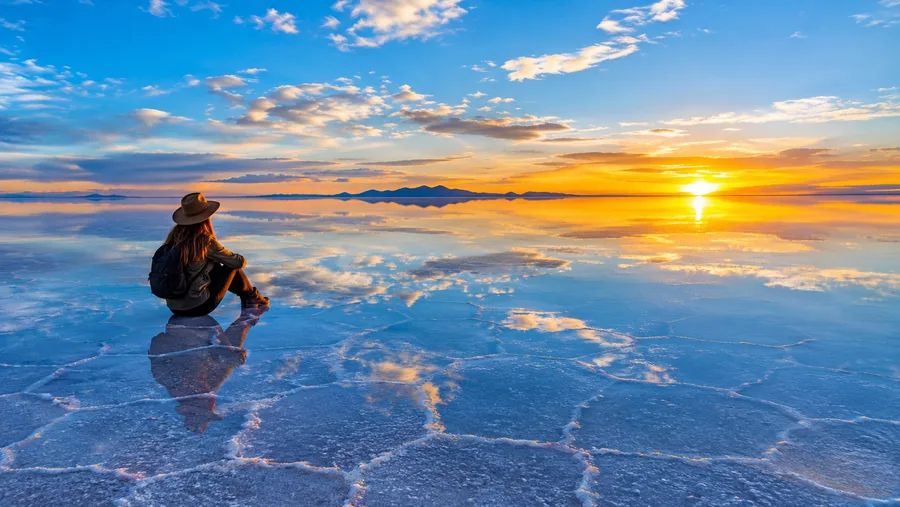
February is usually the peak month for this phenomenon. If you want those dreamlike shots where clouds float under your boots, this is the window. Sunrise and sunset turn the water into liquid pastel, drifting from soft violet to gold in about twenty minutes. Night photography during a calm wet-season evening reveals the Milky Way reflected beneath your feet, though you need rubber boots and serious patience to withstand the wind chill.
Pro tip: Bring your own neoprene socks to wear inside the communal rubber boots provided by tour operators. The boots leak often, and wading through briny 3-degree water for an hour will numb your toes faster than you expect.
There is a serious trade-off to the wet season that many glossy brochures gloss over. When the flats flood deeply, large sections become completely impassable. Vehicles cannot drive safely through deep brine because salt water eats electrical wiring and destroys wheel bearings. Drivers refuse to risk getting stranded thirty miles out. Incahuasi Island, with its giant cacti and panoramic view, is usually cut off entirely during February. If you visit then, you will spend most of your time along the edges near Colchani rather than crossing the heart of the salt flats.
The Dry Season: Hexagons, Deep Backcountry, and Crisp Skies
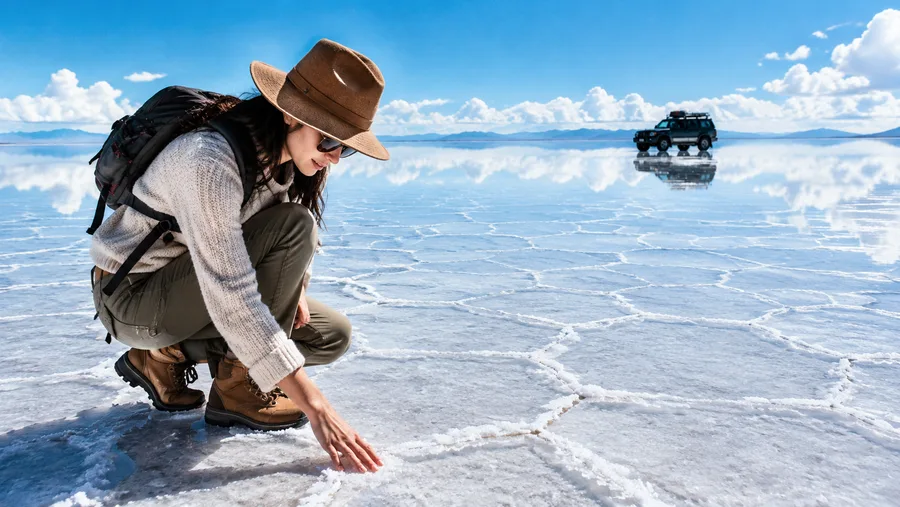
May through October brings bone-dry weather and cold winds. As the moisture evaporates under the intense Altiplano sun, the salt crust crystallizes and contracts, creating raised geometric polygons. Miles of these white hexagons interlock across the basin floor. The ground feels hard as concrete under your tires. For travelers who want to explore every corner of the salt desert, this is widely considered the salar de uyuni best time to go.
Dry weather means complete accessibility. Drivers can step on the gas and carry you straight across to Incahuasi Island, the cave systems near Coqueza, and the remote southern edges leading toward Chile. You can pull off those classic forced-perspective perspective photos without fighting puddles or splashing mud on your lenses. If you want more tips on balancing camera angles on the flat ground, check out our Salar de Uyuni photography guide for setting up those optical illusions with toy dinosaurs and cooking pots.
- Clear blue skies: Rain is practically nonexistent throughout June and July, meaning uninterrupted sunlight and deep blue backdrops every day.
- Total vehicle mobility: Every route across the flats is open, allowing 4x4s to take direct lines without detouring around flooded zones.
- Stargazing clarity: Winter nights offer exceptionally low humidity, producing some of the clearest views of the galactic core on Earth.
- Access to Incahuasi: The coral-like island and its 900-year-old cacti remain fully accessible to hikers every day of the week.
The catch is the winter chill. July and August bring brutal temperatures. Daytime hovering around 14 degrees Celsius drops swiftly to minus 15 once the sun dips behind the Andes. Most salt hotels and basic village refuges on the multi-day routes lack central heating. You sleep under four heavy llama-wool blankets with your beanie pulled down over your ears, listening to the wind rattle the tin roofing.
Month-by-Month Weather and Conditions Breakdown
Every month brings subtle shifts in access, temperature, and crowds. Knowing the nuances helps you pick the right window for your comfort level. Rainfall usually starts picking up toward late December, while the water lingers well into April before evaporating.
| Month | Day Temp (°C) | Night Temp (°C) | Mirror Probability | Overall Access |
|---|---|---|---|---|
| January | 18 | 5 | High | Limited in center |
| February | 17 | 4 | Very High | Edges only |
| March | 18 | 3 | Moderate | Improving |
| April | 16 | 0 | Low to Moderate | Good |
| May | 14 | -5 | Very Low | Full |
| June | 12 | -10 | None | Full |
| July | 11 | -14 | None | Full |
| August | 13 | -11 | None | Full |
| September | 15 | -6 | None | Full |
| October | 18 | -2 | None | Full |
| November | 19 | 1 | Low | Full |
| December | 19 | 3 | Moderate | Good |
July is consistently the coldest month on the Altiplano. If you hate sleeping in thermal underwear and wool mittens, steer clear of mid-winter. November offers warmer nights and long days, making it pleasant for camping or spending extended hours outdoors without feeling your fingers go numb.
Book your Salar de Uyuni tour experience:
Choosing Your Route Based on the Season
Weather does not just change the salt flats; it alters the entire Altiplano region. Most travelers do not just visit the flats for an afternoon. They book an extended expedition like a 3-day Salar de Uyuni tour that heads south through the high-altitude deserts, passing steaming geysers, the Salvador Dalí desert, and colorful mineral lagoons.
In mid-winter, high mountain passes near the Chilean border occasionally close due to surprise blizzards. Heavy snowfall can block routes between Laguna Colorada and San Pedro de Atacama for three or four days at a time. Drivers adapt by skipping higher altitude lagoons or taking circuitous dirt roads that add hours of bone-jarring washboard tracks to your journey. Summer brings its own hassles down south, where swollen mud creeks sometimes swallow Land Cruiser axles whole.
Note: Winter storms in June and July can occasionally shut down the border crossing at Hito Cajón into Chile without warning, leaving travelers scrambling to reroute through standard bus routes.
You also need to think about daylight. Winter days are short on the southern Altiplano. Sunset hits before 6:00 PM in June, which forces tour operators to rush through stops at the geysers and rock formations to reach shelter before pitch-black freezing darkness sets in. Summer days grant you nearly two extra hours of daylight to wander around the train cemetery or explore the bizarre geology at Valle de Rocas.
- Layering strategy: Pack merino base layers, a fleece, and a windproof outer shell, regardless of which month you travel.
- Vehicle check: Ensure your tour agency carries two spare tires and a tow strap, especially during muddy wet season transitions.
- Skin protection: The salt crust reflects up to 80 percent of UV radiation, so pack polarized sunglasses and mineral sunscreen year-round.
- Cash reserve: Carry at least 300 Bolivianos in cash for park entrance fees, hot spring access, and bathroom stops along rural highways.
The Shoulder Months: Finding the Secret Sweet Spot
If you ask local guides about their favorite time to go to salar de uyuni bolivia, many will name April or late November. These transition periods offer a compromise that avoids the extremes of both heavy flooding and winter deep freezes.
Late April is special. The heavy summer downpours taper off, leaving small pockets of standing water on the northern edges near Tunupa Volcano, while the central tracts dry out completely. You can drive to Incahuasi Island in the morning, hike through the giant trichocereus cacti, and then drive thirty minutes northeast in the afternoon to find a quiet patch of standing water for mirror photos. The air is noticeably warmer than in June, with nighttime lows rarely dropping below freezing.
November is another underrated month. Temperatures climb to pleasant daytime highs near 19 degrees Celsius, and tourist crowds remain light before the December holidays. The salt crust is cracked and pristine white. You might catch early afternoon storm clouds gathering over the Andes, providing dramatic backdrops for wide-angle landscape shots without the driving rain that turns roads into grease. It represents an easy, low-stress window for anyone prioritizing comfort over reflections.
Frequently Asked Questions about best time to visit salar de uyuni bolivia
What is the absolute best month for the mirror reflection effect?
February offers the most reliable water levels for reflections across the northern sections of the flats, though late January can be just as good if summer rains arrive early.
Can you see the mirror effect in the dry season?
No. When the flats are dry from May to November, the surface is hard, textured salt polygons. You will not find water reflections unless an anomalous freak rainstorm sweeps through the region.
Is Salar de Uyuni too cold to visit in July?
It is very cold at night, regularly dropping to minus 15 degrees Celsius. However, days are sunny, dry, and pleasant around 12 degrees. With proper winter thermals and a sleeping bag liner, it is still an incredible time to visit.
Quick Reference
- Mirror season: January to March
- Dry season: May to October
- Shoulder sweet spot: April and November
- Coldest stretch: June through August
Book your Salar de Uyuni tour experience:
The Bottom Line
There is no single perfect date to visit this corner of Bolivia. If you want the dreamscape of the bolivia mirror lake with clouds floating below your feet, book your trip between late January and early March, and accept that some remote roads will be closed. If you want endless white horizons, pristine geometric hexagons, and full access across every mountain pass into Chile, head out between May and October. Dress in warm layers, pack some extra cash, and let the Altiplano do the rest.
Read more about Salar de Uyuni tour.